
When a clinic does not need more content — it needs a system
Mar 17, 2026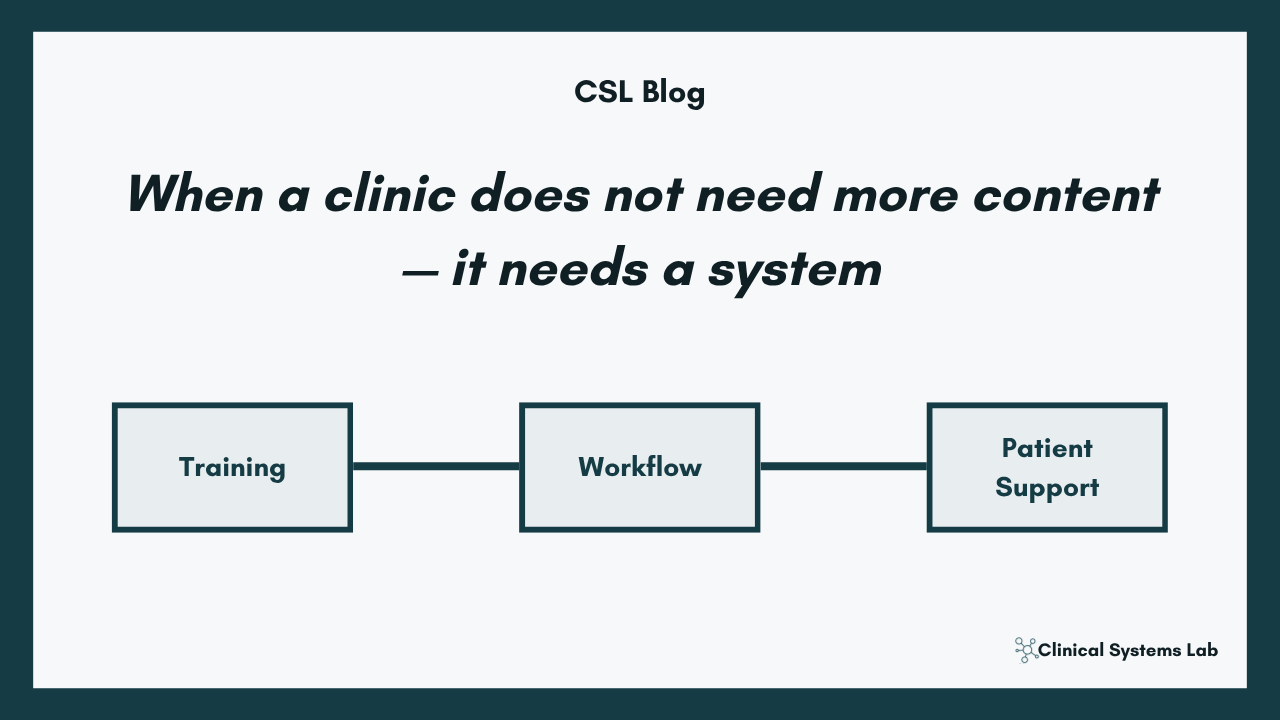
Many clinical teams are not struggling because they lack content. They are struggling because the materials they already have do not function as a system.
Over time, training decks, workflows, handouts, scripts, and support tools get created in response to different needs. Some may be useful on their own. But useful pieces do not automatically create a clear delivery model.
That disconnect shows up quickly in practice. Training may describe one process while day-to-day workflow looks different. Patient-facing materials may not match what is said during onboarding or follow-up. Staff fill in the gaps from memory, which creates variation, confusion, and extra friction.
At that point, the issue is not simply whether enough content exists. It is whether the materials actually support the workflow.
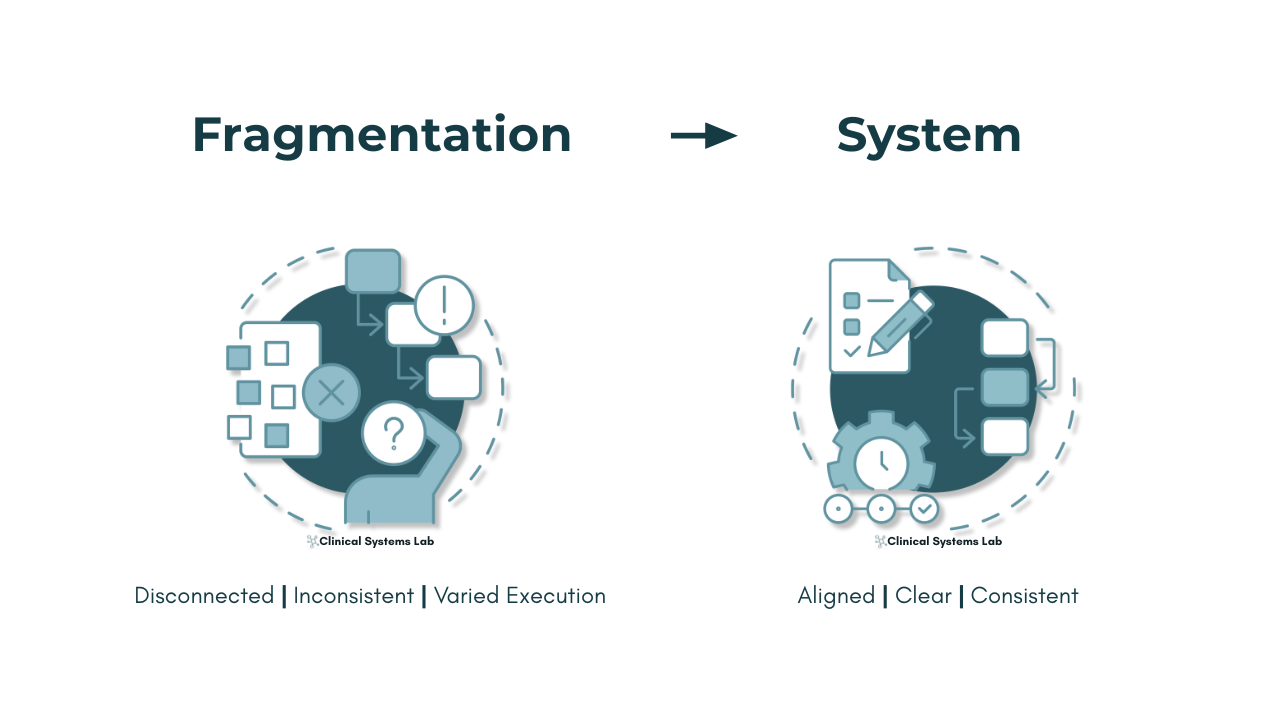
A systems approach starts there.
Instead of asking what new document should be built next, it asks how the process works across touchpoints and across audiences. What does the clinician need? What does the staff member need? What does the patient need? Where are the handoffs? Where does confusion happen? Where are people relying on memory or workaround habits because the materials do not support delivery clearly enough?
Once those questions are answered, the work changes. The goal is no longer to produce isolated content pieces. The goal is to build a connected set of materials that supports real-world delivery.
That may include training that reflects the actual workflow instead of an idealized one. It may include staff-facing supports that clarify what happens next at each touchpoint. It may include patient-facing tools that reinforce the same expectations, language, and sequence already established elsewhere in the system. In some cases, the right next step is not creating anything new at all. It is restructuring, simplifying, and aligning what already exists.
A clinic may not need more content when:
- multiple materials already exist, but they do not align
- teams are using different versions of the same information
- staff are filling process gaps informally
- patient-facing tools do not match the actual delivery flow
- implementation depends too heavily on individual interpretation
In those cases, the next best step may not be another asset. It may be reviewing what exists, clarifying the workflow, and rebuilding the materials so they support a more consistent delivery model.
That is the difference between producing content and building a system.
Get new insights from Clinical Systems Lab
Subscribe for occasional insights on workflows, implementation, and patient-facing tools.
We hate SPAM. We will never sell your information, for any reason.