
Review + restructure vs new build: where should a clinical team start?
Apr 14, 2026
When systems are not working, the instinct is often to start over.
Sometimes that is the right call. But not always.
A lot of clinical teams already have materials in place: training decks, workflows, patient-facing resources, scripts, documentation supports, and role-specific tools built over time to solve real needs. The problem is not necessarily that nothing exists. It is that what exists may be inconsistent, outdated, duplicative, hard to use, or disconnected from the way delivery actually works.
That is where teams can lose time.
A full rebuild sounds decisive. But if useful pieces already exist, rebuilding everything from scratch can create unnecessary cost and delay. On the other hand, trying to preserve a structure that no longer supports the real workflow can keep the same confusion in place.
The better starting point is not always a new build. It is a clearer read on the problem.
What review/restructure means
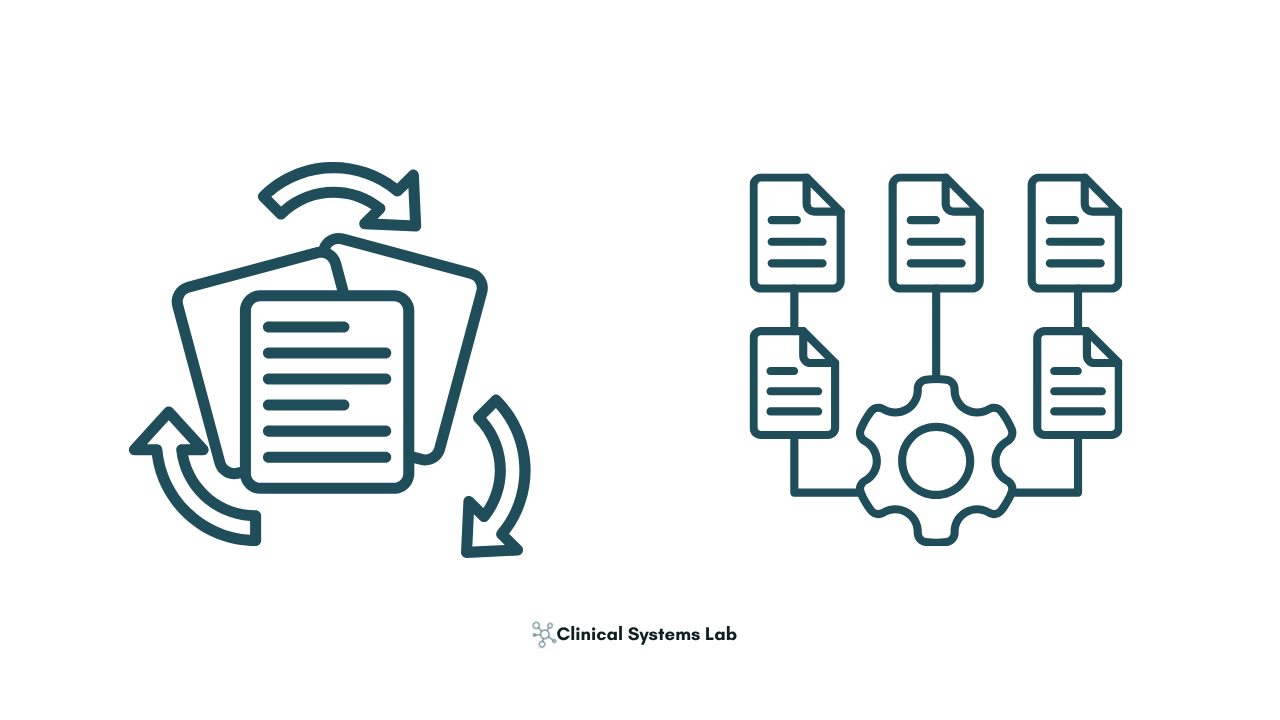
Review/restructure is not just light editing. It means looking at current materials and asking whether they still support the real care model, workflow, and audiences they were meant to serve.
That often includes:
- identifying what still works
- finding overlap or conflict
- spotting gaps that affect delivery
- clarifying which version is current
- reorganizing materials into a clearer structure
- rebuilding only what actually needs to be rebuilt
In many cases, the issue is not lack of effort. It is that the system grew in pieces.
 When review/restructure is the better first step
This is often the better starting point when:
- a large amount of material already exists
- teams are working around clutter, duplication, or version confusion
- some pieces are still useful, but the overall structure is unclear
- implementation is inconsistent because the system is hard to follow
- the core workflow is still valid, but the supporting materials are not well aligned
When a new build is the better move
A new build is more appropriate when:
- the existing materials are too outdated or inconsistent to salvage
- the delivery model has changed significantly
- the organization is building a new program or service line
- multiple audiences need aligned materials that do not yet exist
- there is no usable structure holding the work together
Why this decision matters
Choosing the wrong starting point creates its own drag.
Rebuilding too early can waste time and discard useful work. Restructuring the wrong system can preserve confusion and make teams feel like progress is happening when the real issues are still untouched.
That is why the first question is not what to make next. It is what is actually broken.
Final takeaway
Not every clinical team needs a full rebuild.
Some need a new build. Some need a clearer architecture for what already exists. Some need both, in the right order.
The point is not to choose the biggest solution first. It is to choose the starting point that makes the next phase clearer.
A team does not always need a brand-new build. Sometimes it needs a clearer read on what is worth keeping, what is missing, and what needs to be rebuilt.
Get new insights from Clinical Systems Lab
Subscribe for occasional insights on workflows, implementation, and patient-facing tools.
We hate SPAM. We will never sell your information, for any reason.